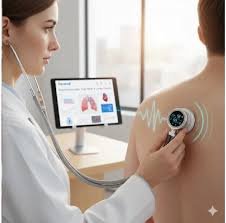
Fonendi, commonly referred to as a stethoscope in medical contexts, is one of the most essential diagnostic tools for healthcare professionals. This instrument allows doctors, nurses, and paramedics to listen to internal body sounds, such as heartbeats, lung function, and bowel movements, providing critical insights into a patient’s health. Over the years, the design and technology behind fonendi have evolved from basic acoustic models to advanced electronic versions, improving sound clarity, noise reduction, and diagnostic accuracy. Understanding the structure, types, applications, and maintenance of fonendi is vital for healthcare practitioners to ensure accurate diagnoses and efficient patient care. This article explores the functionality, variations, technological advancements, practical applications, and best practices associated with modern fonendi, offering a comprehensive guide for medical professionals and enthusiasts alike.
The Structure and Function of Fonendi
Fonendi typically consists of three main components: the chest piece, tubing, and earpieces. The chest piece, which contains a diaphragm and bell, is used to capture internal body sounds. The diaphragm is best for high-frequency sounds like heartbeats, while the bell is more sensitive to low-frequency sounds, such as certain heart murmurs. The tubing transmits these sounds to the earpieces, which are designed to fit comfortably in the user’s ears while minimizing external noise interference. Modern fonendi use materials like stainless steel, latex-free tubing, and high-quality acoustical membranes to enhance sound transmission and durability. Understanding the function of each component allows medical professionals to optimize their listening technique and improve diagnostic accuracy.
Types of Fonendi
Fonendi come in a variety of types, each designed for specific uses and user preferences. Acoustic stethoscopes are the most traditional and widely used, relying solely on the transmission of sound through tubing to the earpieces. Electronic stethoscopes amplify sound, reduce ambient noise, and may include features like recording or Bluetooth connectivity for telemedicine applications. Pediatric and infant stethoscopes have smaller chest pieces to accurately capture heart and lung sounds in children, while cardiology stethoscopes are specifically designed for detailed cardiac assessments, offering higher sensitivity to subtle murmurs and abnormal rhythms. Choosing the appropriate type depends on the user’s specialization, patient population, and clinical needs.
Applications in Medical Practice
Fonendi are indispensable across nearly all areas of healthcare. In general practice, they are used to perform routine cardiovascular and respiratory assessments, detect irregular heartbeats, monitor blood pressure when paired with sphygmomanometers, and identify abnormal lung sounds. In emergency medicine, quick auscultation can determine the severity of trauma or respiratory distress, guiding immediate interventions. Cardiologists rely on advanced stethoscopes to detect subtle murmurs or arrhythmias, while pediatricians use specialized models to evaluate young patients’ heart and lung health. Even in veterinary medicine, fonendi are adapted to examine animals, reflecting their versatility across species. The widespread applicability of fonendi makes them fundamental tools for accurate, non-invasive diagnostics.
Advantages of Using Fonendi
Fonendi offer numerous advantages in medical diagnostics. Their non-invasive nature allows clinicians to assess internal functions without discomfort or risk to patients. The immediacy of feedback enables rapid clinical decisions, which is especially critical in emergency situations. Modern electronic fonendi provide amplification and noise reduction, ensuring accurate detection of faint sounds that might otherwise be missed. Additionally, lightweight designs, ergonomic tubing, and comfortable earpieces make prolonged use feasible for healthcare providers. The adaptability of fonendi across patient age groups, clinical settings, and medical specialties highlights their enduring importance in healthcare.
Technological Advancements in Fonendi
Recent technological developments have significantly enhanced fonendi functionality. Digital stethoscopes amplify sound signals and may allow for adjustable frequency modes to focus on specific heart or lung sounds. Bluetooth-enabled models facilitate telemedicine by transmitting auscultation data to remote specialists, improving access to care. Some electronic fonendi include recording capabilities, enabling longitudinal tracking of patient conditions or educational use in medical training. Noise-canceling features enhance performance in busy environments, and AI-assisted auscultation is emerging as a tool for detecting anomalies with increased precision. These advancements demonstrate the evolving role of fonendi in both clinical practice and medical technology.
Maintenance and Hygiene Practices
Proper maintenance is crucial to ensure the longevity and effectiveness of fonendi. Cleaning the diaphragm and bell with alcohol wipes after each patient use prevents cross-contamination and infection. Tubing should be regularly inspected for cracks or stiffness, and earpieces should be cleaned to maintain comfort and hygiene. Electronic stethoscopes require periodic battery checks and software updates to maintain optimal performance. Proper storage, avoiding extreme temperatures or prolonged sunlight exposure, prevents damage to sensitive components. Regular maintenance not only preserves the instrument but also supports accurate diagnostics and patient safety.
Challenges and Limitations
While fonendi are highly valuable, they have limitations. Acoustic stethoscopes may struggle in noisy environments or with subtle sounds, while electronic models are often more expensive and require careful handling to avoid damage. Users must possess training and experience to interpret sounds correctly; misinterpretation can lead to inaccurate diagnoses. Battery dependence in electronic models also introduces potential reliability issues. Environmental factors, such as ambient noise or poor placement of the chest piece, can affect sound clarity. Understanding these challenges enables healthcare providers to use fonendi effectively while mitigating potential drawbacks.
Choosing the Right Fonendi for Clinical Needs
Selecting the ideal fonendi involves evaluating clinical requirements, patient populations, and budget considerations. General practitioners may prioritize versatility and ease of use, while specialists like cardiologists may require high-sensitivity models with electronic amplification. Pediatricians or veterinarians need appropriately sized chest pieces for accurate assessment. Budget constraints also influence the choice, as electronic models are typically more expensive but offer advanced features. Testing multiple models, considering ergonomics, sound clarity, and durability, ensures that the chosen fonendi meets both clinical and practical needs effectively.
Conclusion
Fonendi remain indispensable tools in modern medicine, providing critical insights into cardiovascular, respiratory, and other internal functions. From traditional acoustic models to advanced electronic stethoscopes, these instruments combine precision, versatility, and convenience to support accurate, non-invasive diagnostics. Understanding the structure, types, applications, technological advancements, and maintenance requirements ensures that healthcare professionals maximize the value of their fonendi while delivering optimal patient care. With continued innovation in digital technology and telemedicine integration, the role of fonendi will remain central in healthcare for years to come.
Frequently Asked Questions (FAQ)
What is a fonendi?
A fonendi is a stethoscope used to listen to internal body sounds such as heartbeats, lung function, and bowel movements for medical assessment.
What are the main types of fonendi?
The main types include acoustic stethoscopes, electronic stethoscopes, pediatric stethoscopes, and cardiology stethoscopes, each designed for specific clinical needs.
Are electronic fonendi better than acoustic ones?
Electronic stethoscopes provide amplified sound, noise reduction, and recording capabilities, but acoustic stethoscopes remain effective, affordable, and widely used.
How do I maintain my fonendi?
Clean the diaphragm, bell, earpieces regularly, inspect tubing for damage, store properly, and perform battery or software checks for electronic models.
Can fonendi be used for animals?
Yes, veterinary versions exist with modifications for different species and chest sizes, enabling accurate auscultation in animals.
Do fonendi require training to use effectively?
Yes, proper training and experience are essential for interpreting sounds accurately and making informed clinical decisions.